
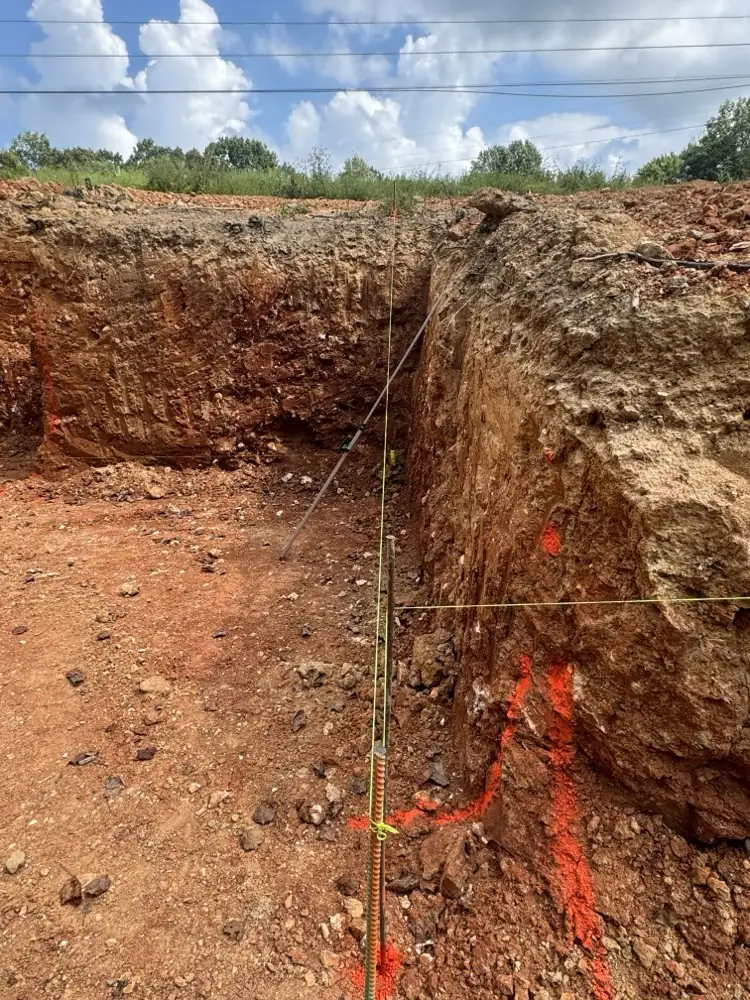
How Much Does Basement Excavation Cost in Tennessee?
Basement excavation for new construction costs $10,000 to $30,000 on average, according to a national cost guide. The dig typically takes 2 to 4 days. Hard access or rocky soil can push the price to $30,000 to $50,000 or more. Those figures cover excavation and grading only, and the walls and floor are priced separately.
These are market numbers, not our price list. As an excavation contractor based in Woodlawn, just west of Clarksville, we dig basements and foundations. Builders and contractors bring us most of our work, from house builds to commercial buildings. Every basement dig gets its own free estimate.
What does it cost to dig a basement in 2026?
The national guide prices a basement dig by depth and by soil. Standard soil at 8 to 9 feet sits at the low end. Difficult or rocky soil puts any depth from 8 to 12 feet in the highest bracket.
| Basement dig | Market range |
|---|---|
| 8 to 9 feet deep, standard soil | $10,000 to $20,000 |
| 10 to 12 feet deep, standard soil | $20,000 to $30,000 |
| 8 to 12 feet deep, difficult or rocky soil | $30,000 to $50,000 or more |
| New basement under an existing house with a crawl space | $20,000 to $45,000 or more |
These rows cover the dig itself. The concrete floor and the foundation walls are separate costs, and other trades build them.
What moves the price of a basement dig?
Depth and soil set the starting point. These things move a dig up or down from there:
- Depth. Each extra foot is more dirt to dig and move.
- Size. A bigger footprint moves more dirt, and the guide notes excavation rates do not usually drop on bigger jobs.
- Access. Prices rise when the dig has to work around existing buildings or fit a tight space.
- Rock. Soft, loose soil costs the least to dig. Hardpan and rock ledges cost far more.
- The spoil. Spoil is the dirt that comes out of the hole. Keeping it on the lot costs less than moving it off.
- Backfill. Dirt goes back against the walls once they are up. Backfill and grading often need extra dirt brought in.
- Minimums. Most operators charge at least one day, or eight hours.
- Buried lines. Digging near buried pipes or utility lines takes extra caution and more labor time.
The national guide also prices dig work by the hour and by the cubic yard. Those rates help you read an estimate line by line.
| Other line items | Market range |
|---|---|
| Excavator and operator | $100 to $300 per hour |
| General excavation | $2.50 to $15.00 per cubic yard |
| Fill dirt | $5 to $25 per cubic yard |
| Digging around an existing foundation | $5,000 to $15,000, or $100 to $250 per linear foot |
Ask how your contractor plans to use the dirt from the hole. The guide says it can go back in as backfill or into grading the lot around the house.
The open hole is also the time to plan drainage. Foundation drains carry water away from the walls. Adding them later means paying to dig around a finished foundation.
Why is rock the budget line to ask about in Middle Tennessee?
Rock is the first line to ask about around here. The Western Highland Rim’s bedrock is chiefly limestone, chert, shale and sandstone. The Nashville Basin, which the Highland Rim surrounds, sits mainly on Ordovician limestone. No cost guide can tell you where that rock sits under your lot.
Sinkholes come with limestone ground. In the northern part of the Western Highland Rim, sinkholes form readily. Montgomery County’s grading permit checklist for new developments asks for as-built plans that mark sinkholes, caves and other karst features.
The national guide prices rock by the cubic yard. Removing boulders runs $50 to $200 per cubic yard when they stay on the property. Hauling them away runs $220 to $250 per cubic yard. Rock that needs jackhammering or blasting can add costs, so the guide says to put those in the contract.
Before you sign, ask how the estimate handles rock. Get the price per cubic yard in writing, along with where the rock goes. If a site needs blasting, that is a separate trade.
How does a basement compare with a slab or a crawl space?
The dig is one piece of what a basement costs. For the whole foundation, the national guide puts a poured concrete slab at $12,000 to $28,000. An unfinished basement foundation runs $70,000 to $100,000. A crawl space needs a much shallower hole than a basement, so there is less dirt to move.
Adding a basement under an existing house costs more to dig. Digging one under a house with a crawl space runs $20,000 to $45,000 or more for the excavation alone. The walls and floor are concrete work, which is a separate trade from excavation.
How long does basement excavation take?
The national guide says a basement dig typically takes 2 to 4 days. The size of the hole and the ground set where a job lands in that window. The same guide says rocky ground can stretch excavation to 3 weeks or more.
Other work fits around the dig. On a wooded lot, clearing the house site comes first. A new house also needs trenches for water and sewer lines, so plan those with the dirt work.
What permits does a basement dig need in Tennessee?
Check with your city or county building office first. A national cost guide puts an excavation permit at $50 to $400. Tennessee’s construction stormwater permit kicks in when a job disturbs one acre or more. A smaller site still counts when it is part of a larger common plan of development or sale.
Tennessee 811 needs notice at least 3 and no more than 10 working days before digging starts. There is no charge to request the markings.
How do you get a real number for your basement dig?
A national guide shows the shape of the cost, but it cannot see your lot. The guide itself says an accurate excavation estimate takes an in-person visit to the site. Depth, footprint, access and rock set the real number.
We handle basement and foundation digs out of Woodlawn, just west of Clarksville. We cover Montgomery County and travel to Nashville and Franklin. Estimates are free, and we come out to look at the ground. Call or text (931) 572-8673.