How Much Does a Building Pad Cost in Tennessee?
A foundation pad for a new home site runs $1,500 to $10,000 in HomeGuide’s national cost guide. Angi, another national guide, puts site preparation at $1,300 to $5,600, or $1.50 to $5.00 a square foot. The pad’s size and height, the slope, rock and fill set your building pad cost.
These are market numbers, not our price list. At Wilson Forestry and Excavating, building pads are part of our site prep and grading work. We are based in Woodlawn, just west of Clarksville. Builders and general contractors bring us much of our pad and site prep work.
What does a building pad cost in 2026?
National cost guides such as HomeGuide and Angi price each piece of a pad job. Each figure comes from the guide named beside it.
| Line item | Market range | Guide |
|---|---|---|
| Foundation pad for a new home site | $1,500 to $10,000 | HomeGuide |
| Shed pad, 1,000 sq ft | $1,500 average, $1.50 to $2.00 per sq ft | Angi |
| Residential lot, 10,000 sq ft | $3,500 average, $1.50 to $3.00 per sq ft | Angi |
| 1 acre, 43,560 sq ft | $7,000 average, $0.50 to $2.00 per sq ft | Angi |
| Clearing land to build | $2,500 to $5,000 national average | Fixr |
| Cutting a hillside or flattening slopes | $1,000 to $5,000 | HomeGuide |
| Rock or ledge removal | $1,000 to $20,000 and up | HomeGuide |
| Land grading and leveling | $500 to $5,000 | HomeGuide |
| Excavation | $2.50 to $15.00 per cubic yard | HomeGuide |
| Excavator and operator | $100 to $300 per hour | HomeGuide |
| Fill dirt | $5 to $25 per cubic yard | HomeGuide |
| Delivered truckload of dirt, topsoil or sand, 10 to 15 cubic yards | $150 to $600 | HomeGuide |
| Gravel for pads | $30 to $60 per ton | Angi |
| Geotextile fabric | $0.50 to $2.00 per sq ft | Angi |
| Geotechnical report, down to 20 feet | $960 | Fixr |
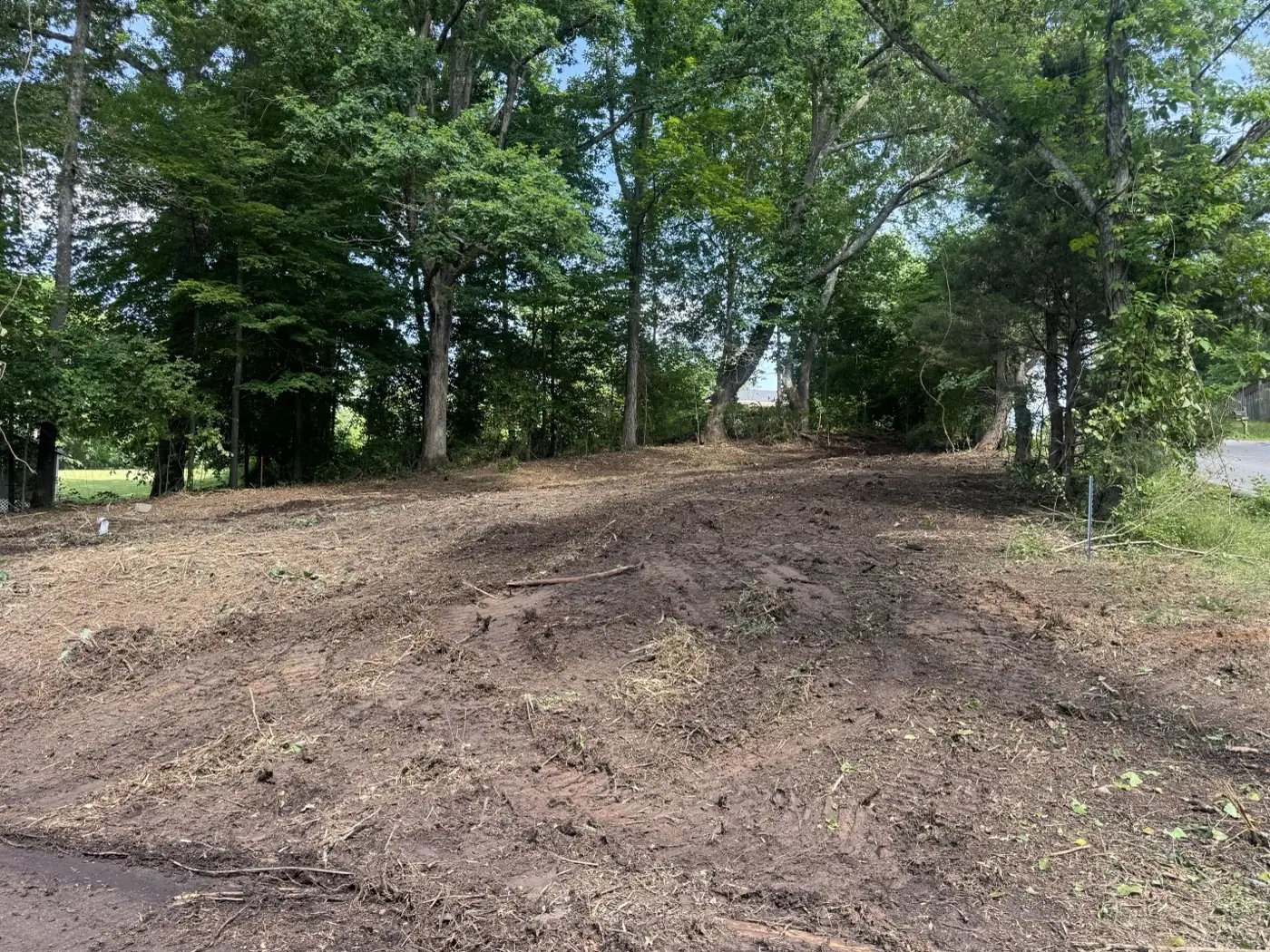
An open, flat lot may need little beyond grading and fill. A wooded hillside lot can add clearing, a cut into the slope, rock work and a soil report.
What moves the price of a building pad?
- Size and height. A bigger pad covers more ground, and a taller one takes more fill.
- Slope. On sloped ground, dirt cut from the high side fills the low side. The steeper the lot, the more dirt has to move.
- Clearing. Trees and stumps come out before a machine can set grade. On a wooded lot, clearing the pad site comes first.
- Fill brought in or balanced. A balanced pad uses the dirt already on the lot. When the lot comes up short, fill dirt gets bought and trucked in.
- Compaction. Fill goes down in layers called lifts, and each one gets packed before the next. More lifts mean more machine time.
- The stone base. A layer of stone over the packed dirt adds material. Angi prices gravel for pads by the ton.
- Water. The finished pad has to shed water, and bare dirt has to stay on the lot. Silt fence around the pad holds sediment while the ground is bare.
- Access. Machines and delivery trucks need a way in. On raw land, a gravel drive in to the pad can come first.
- Utilities. Water lines and electrical conduit have to reach the building. Utility trenches to the pad can be dug while the machines are on site.
Why is rock the line to ask about in Middle Tennessee?
Rock has the widest range in the table. HomeGuide puts rock or ledge removal at $1,000 to $20,000 and up. In Middle Tennessee, ask about it early.
The Western Highland Rim starts a few miles west of Nashville. Its bedrock is chiefly limestone, chert, shale and sandstone. Nashville sits in the northwest part of the Nashville Basin, which rests mainly on limestone.
In the northern part of the Western Highland Rim, sinkholes form readily. Montgomery County’s stormwater concept plans have to show any sinkholes on the site.
No guide can see what sits under your lot. A geotechnical report examines the soil, and Fixr puts one at $960 down to 20 feet. Before you sign, ask how the estimate prices rock if the machine hits it.
What does the building code ask of a slab pad?
Code rules shape the dirt work under a concrete slab. The lines below are the 2018 International Residential Code’s model text for slabs. Your town or county may have adopted another edition, and your engineer’s plan controls. Coopertown, for one, has adopted the 2021 International Building Codes.
- Remove all vegetation, topsoil and foreign material inside the foundation walls.
- Compact the fill in 8 to 12 inch lifts for even support under the slab.
- Unless approved, keep fill within 48 inches of clean sand or gravel, or 8 inches of earth.
- Where the slab sits below grade, lay a 4 inch base course of clean graded sand, gravel or crushed stone. Well-drained sand and gravel soils are the exception.
Stripped topsoil is dirt to move, and every lift is another pass to pack. More than 8 inches of earth fill needs approval, so settle the pad height before the dirt work is priced.
What about barndominium and shop pads?
A barndominium or shop pad goes through the same steps as a house pad. The paperwork can differ by town. In Coopertown, post-frame homes, barndominiums included, need an engineer’s design and stamped drawing before the town issues a permit.
The pad then gets built to the engineer’s numbers. Farm buildings there, like tobacco barns, dairy barns, horse stables and farrowing houses, need a permit but no fee. Check your own town or county before the dirt work starts.
What permits does a building pad need in Tennessee?
Permits turn on how much ground the job disturbs and where the lot sits. Four sets of rules can apply.
- State stormwater permit. The state’s construction stormwater permit covers clearing, grading or excavation that disturbs one acre or more. Smaller sites count when they are part of a larger common plan of development or sale. The state fee is $250 for 1 to under 5 acres, and there is no fee under 1 acre.
- Montgomery County. A project that disturbs more than 10,000 square feet, but less than half an acre, needs a stormwater concept plan.
- Town grading permits. Coopertown’s grading permit has no fee under 1 acre. It costs $200 from 1 to under 5 acres, and $200 plus $30 an acre at 5 acres or more.
- Tennessee 811. The locate notice goes in at least 3, and not more than 10, working days before digging.
Your city or county may set its own numbers. Ask its codes office before you set a start date.
How do you get a real price for your building pad?
Cost guides give you a range to plan around. The real number comes from your lot: its size, slope, rock and the way in.
We handle building pads and lot grading out of Woodlawn, just west of Clarksville. A grade laser sets each pad to the elevation on the builder’s plan. We cover Clarksville and Montgomery County and travel to Nashville and Franklin. Estimates are free, so call or text (931) 572-8673.